Skip to main content
WHY COBRA IS BETTER?
- We consider ourselves a piece of the puzzle and are concerned with helping to reduce our Earth’s increasingly destructive emissions of CO2 gases into our atmosphere.
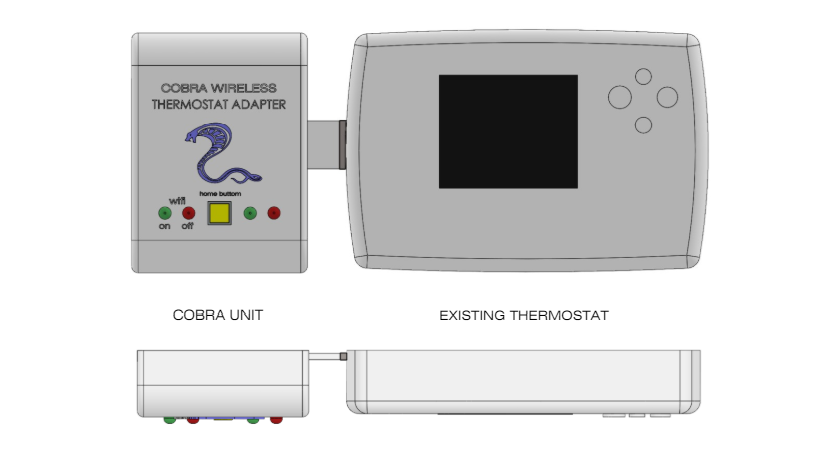
- We are the world’s first residential A.I. cloud-based subscription, power-saving thermostat provider company.
- We’ve engineered thermostats and other devices to have long-term operating memory algorithms to compel HVAC systems to operate at the best annual historical optimal operating efficiency stored on our servers, increasing operating efficiency parameters, and reducing HVAC systems’ power consumption.
- We use A.I. to continuously monitor and force efficiency into our thermostats for each customer system using our proprietary engineering.
- We also include motion, proximity sensors, occupied, unoccupied, and most importantly, periodically exercising (operate) HVAC systems to check and ensure the operational reliability of the system in our network.
- Our controls provide alerts to users when systems malfunction.
- We are expandable to commercial customers, such as high-rise buildings, hotels, and more. We can also service hotels, motels, timeshares, vacation homes, rentals, including energy management connections built into CRS (Central Reservation systems) online booking systems.
- Our control of HVAC systems is made to operate in tandem with CRS and is able to learn and control HVAC systems events based on specific reservations. This will greatly save Hotels, Motels, Timeshares, Vacation Rental homes, which operate on our dedicated cloud servers, to reduce power use during unoccupied periods.
- Our wide area A.I. network servers include operating capability of controlling HVAC cycle rates during start-up triple amperage of multiple customer systems in locally specific power grids of a utility. Cobra’s controllers via our servers continuously learn power usage from operating HVAC systems, comparing run time of systems in the same grids or a plurality of grids, to recognize the operating cycle time to reach and satisfy temperature set points then delaying the next cycle of systems that proved to operate with shorter cycles to meet the intended temperature set point.